Fernando Guérard is an artist-educator experienced in Three-Dimensional Design, Sculpture, Foundations, Art Appreciation, drawing and design fundamentals, sustainable and recycled materials, and traditional and contemporary fabrication methods.
Teaching philosophy
Back to Basics + Student Voice + Sustainability
His teaching combines technical foundations, craftsmanship, creative independence, experimentation, critical thinking, sustainability, and the development of each student’s individual artistic voice.
“I teach students to see structure before surface, to respect the physical language of each material, and to transform technique into personal voice.”
Selected student projects
From observation to structure, material, and independent voice
01
Contour and Blind Drawing
Students begin by slowing down observation. Contour and blind-contour drawing develop hand-eye coordination, structural awareness, line sensitivity, and the discipline required to see rather than assume.
Learning focus
Observation before interpretation
Line as the first armature
Drawing as preparation for sculptural thinking
02
Wire Armature: Endangered Species
Students translate contour into three-dimensional structure through wire armatures, lightweight volume, and surface skin. Research into endangered species connects formal problem-solving with environmental storytelling.
Learning focus
Wire contour establishes structure
Reclaimed materials create lightweight volume
Surface choices communicate texture and identity
03
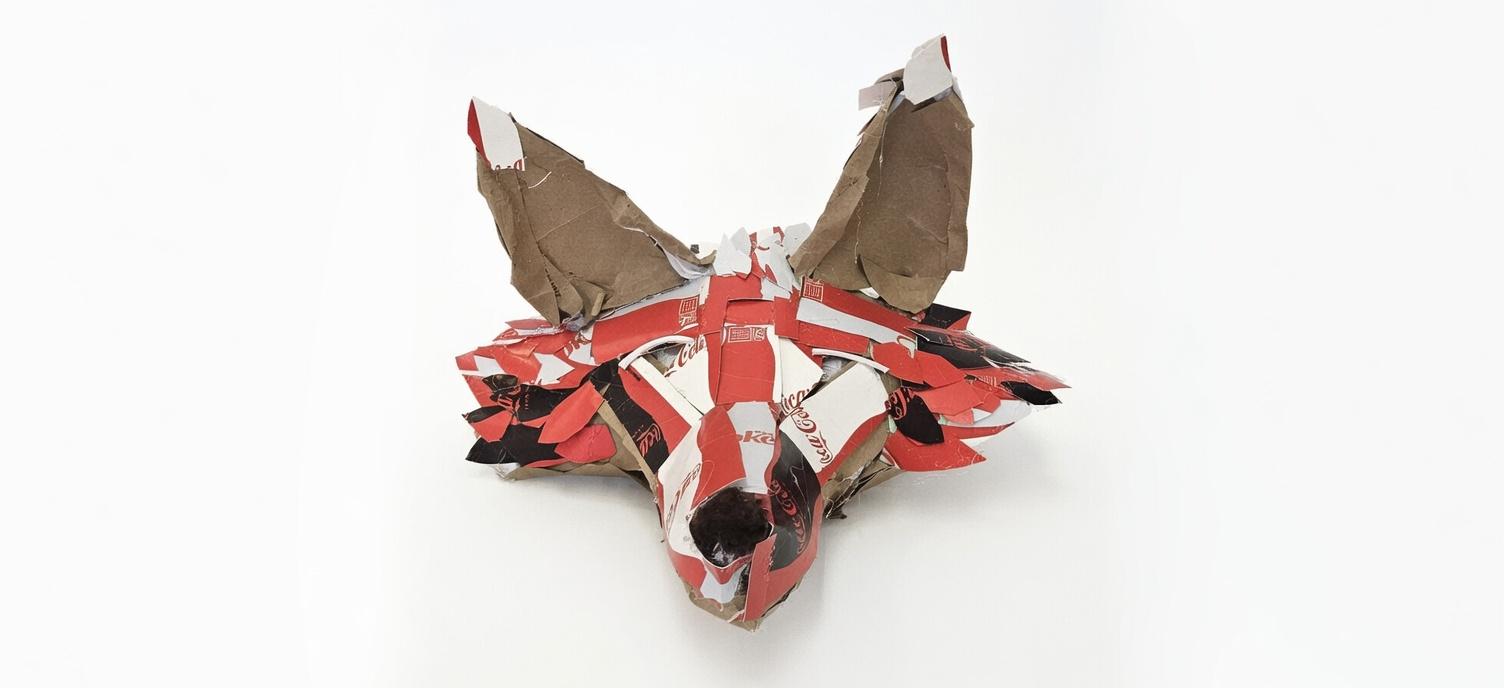
Cardboard Sculpting
Cardboard teaches students to build from a central core outward. Layered material becomes structure and skin, creating volume, rhythm, personality, and a professional finish.
Learning focus
Core-to-skin construction
Structural problem-solving
Surface, rhythm, and narrative form
Red-and-white cardboard animal head and mask sculpture
04
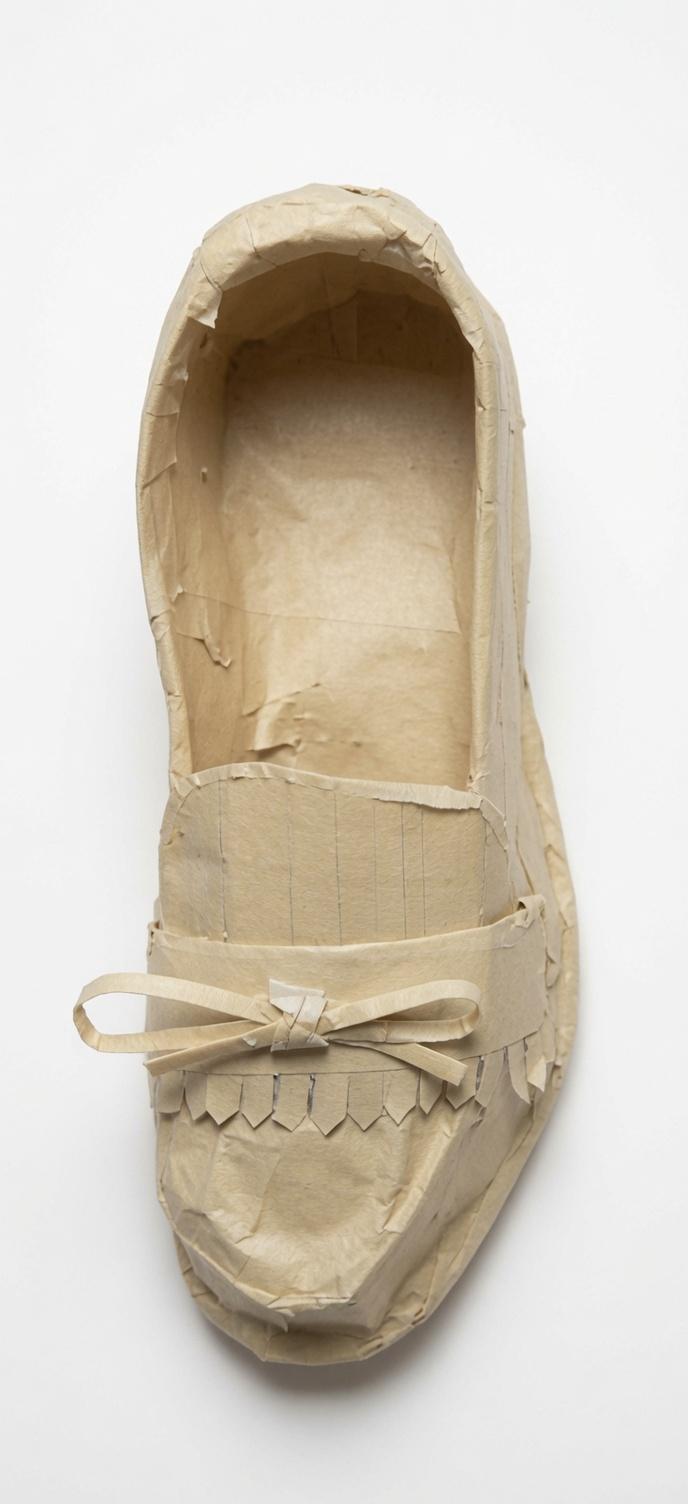
Masking Tape Shoe
Using only masking tape, students recreate a shoe at life scale. The strict material limitation forces close observation, inventive problem-solving, and precise craftsmanship.
Learning focus
Exact scale and proportion
Texture, tread, laces, and seams
Constraint as creativity
1 / 3
Front and top view of a masking-tape ballet flat
Select another view
05
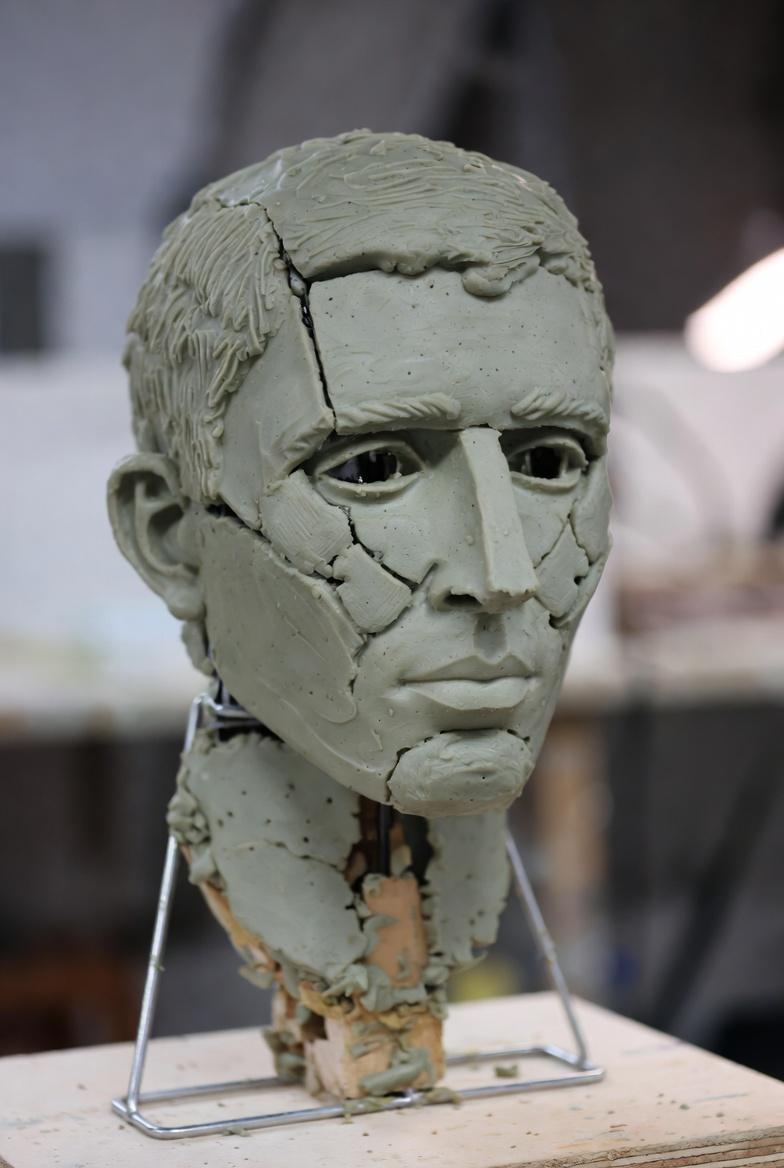
Plaster Bust
Portrait and figure studies build anatomical understanding through additive modeling, armature, facial planes, proportion, and surface transitions. Direct plaster studies also introduce mass, void, restraint, and finish.
Learning focus
Facial planes and proportion
Armature and surface development
Observation translated into volume
1 / 3
Green portrait bust study on an armature
Select another view
06
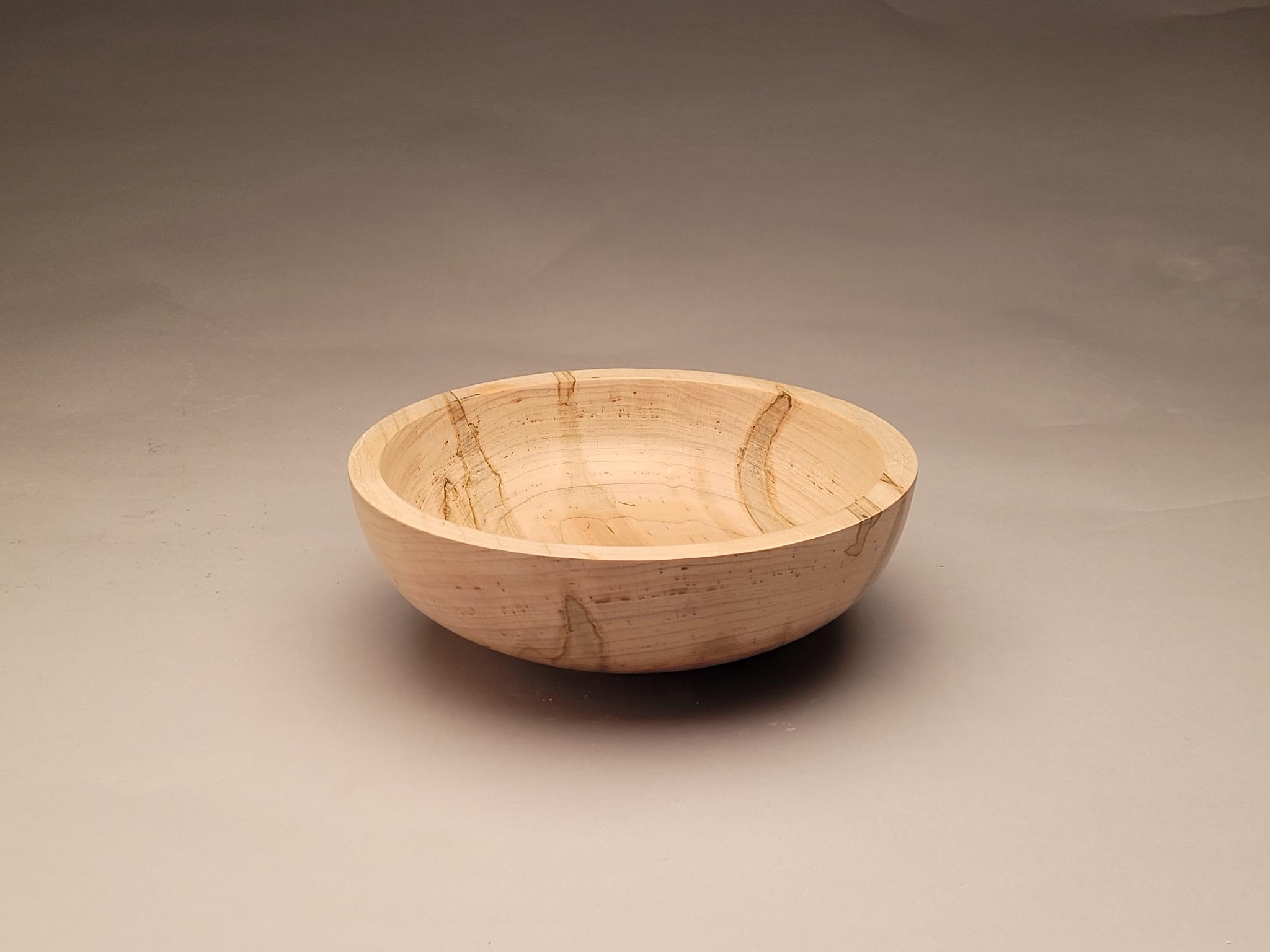
Woodturning
Woodturning teaches tool control, grain orientation, hollowing, wall thickness, finishing, and respect for the natural character of the material.
Learning focus
Lathe safety and control
Form through rotation
Finishing and craftsmanship
1 / 4
Pale wood-turned bowl with visible natural cracks
Select another view
07
Metal Fabrication
Fabrication projects introduce abstract construction through metal rod, sheet material, welded forms, and cold connections. Students study line, plane, balance, rotation, cantilever, and sculpture in motion around the viewer.
Learning focus
Industrial materials
Line versus plane
Structural balance and finish
08
Installation
Installation projects expand sculpture beyond the object. Students consider architecture, viewer movement, gravity, fabric, wire, light, temporary placement, and documentation as active parts of meaning.
Learning focus
Site-specific thinking
Ephemeral materials
Documentation as practice
Courses and teaching areas
Studio instruction across foundational and advanced practice
Fernando brings university-level studio experience, professional fabrication knowledge, curriculum development, critique, and student mentoring to a broad range of courses.